AI Tools For Publishers
A definitive guide to the AI-powered platforms transforming modern publishing workflows
From automating ad sales and billing to streamlining editorial production, artificial intelligence is reshaping how magazine publishers operate at every level. This curated guide covers the best AI tools available to publishers in 2026 — starting with The Magazine Manager, the world's leading magazine CRM, and spanning content creation, visual design, analytics, sales enablement, and workflow automation. Whether you run a regional trade publication or a multi-title media group, the right AI stack can eliminate manual bottlenecks, surface smarter revenue opportunities, and free your team to focus on the work that matters most.

Publishing is not a single industry — it is several demanding disciplines running simultaneously under one roof. On any given day, a magazine operation must close ad deals, manage editorial deadlines, nurture subscriber relationships, reconcile billing, and interpret audience data. Generic AI tools are built for none of these tasks specifically, and that gap matters more than most publishers realize.
Consider ad sales alone. A publishing sales team juggles rate cards, insertion orders, make-goods, issue close dates, and advertiser relationship history. A general-purpose AI assistant has no concept of an insertion order workflow, cannot flag a missed close date, and cannot surface which advertisers lapsed after a single issue. It can draft an email, but it cannot tell a rep which accounts are most likely to renew this quarter based on historical spend patterns.
Editorial production adds another layer of complexity. Content moves from pitch to assignment to draft to layout to print or digital distribution, often across multiple contributors and departments. Coordinating that pipeline requires tools that understand publishing-specific stages — not generic project management logic borrowed from software development or marketing teams.
Audience development and analytics present a third challenge. Publishers need to understand subscriber churn, renewal rates, engagement by issue, and the relationship between editorial topics and advertiser performance. These are metrics that generic analytics platforms rarely surface in a format that is actionable for a circulation or marketing director.
The result is that publishers who rely on horizontal AI tools end up stitching together workarounds — exporting data, reformatting reports, manually bridging systems that were never designed to speak to each other. Specialized AI tools, by contrast, are built around the actual workflows of a publishing operation, which means the intelligence they deliver is grounded in context that generic platforms simply do not have. For publishers managing complexity at scale, that distinction is the difference between a useful tool and a transformative one.
Publishing operations span five distinct disciplines — editorial production, visual content, ad sales, subscription management, and audience analytics — and no single AI tool covers all of them well. The tools that deliver the most value are the ones matched precisely to the problem they solve.
The most widely adopted general-purpose AI writing tool, with broad flexibility for brainstorming, summarizing, translating, and drafting across formats. Best for editorial teams that need a capable, open-ended assistant rather than a structured workflow platform.
A premium AI writing platform built around brand consistency, with a range of content templates and campaign tools designed to generate coordinated assets from a single brief. Best suited for magazine marketing teams producing high volumes of structured content across channels.
A go-to-market AI platform that combines short-form content creation, email outreach, SEO, and sales automation in one dashboard. An accessible option for budget-conscious independent publishers.
A widely used AI-powered writing enhancement tool for grammar, tone, and style consistency. Most valuable as a complement to content creation tools — particularly for editorial teams managing multiple contributors with varying writing standards.
Three distinct tools for AI-generated visuals: Adobe Firefly integrates into professional design workflows, Midjourney produces high-quality artistic imagery, and Canva offers an accessible drag-and-drop design experience for non-designers producing social and digital assets.
A powerful and customizable AI CRM platform built for complex multi-channel ad sales and large subscriber databases. Typically requires significant investment and implementation time — best suited to large media organizations with dedicated operations teams.
Mirabel Technologies' integrated AI suite, Media Mate, is built directly into The Magazine Manager — the first web-based CRM made for publishers, now serving more than 33,000 media properties worldwide. Rather than adding a standalone AI tool, publishers get AI capabilities embedded inside the same platform that handles ad order management, billing, production, and subscription automation.
Match tools to workflow stages, not to hype. Editorial teams need writing and editing AI. Design teams need visual generation tools. Ad sales teams need CRM platforms with AI-assisted pipeline management. Subscription teams need billing automation with predictive churn tools. And every team benefits from a central platform that connects these layers — rather than a fragmented stack of disconnected point solutions.
Our Evaluation Framework
Publishing operations span five distinct disciplines, and the AI tools that make the biggest difference are the ones matched precisely to each one. A tool that transforms editorial drafting won't help your ad sales team close more deals — and a CRM with predictive lead scoring won't speed up your design workflow. Understanding which category a tool belongs to is the fastest way to identify where it fits, what problem it solves, and whether it belongs in your stack.
Tools that help writers, editors, and content teams draft, edit, repurpose, and scale written output across print and digital channels.
Tools that help writers, editors, and content teams draft, edit, repurpose, and scale written output across print and digital channels.
AI-powered platforms that assist with image generation, layout suggestions, photo editing, and brand-consistent graphic production.
AI-powered platforms that assist with image generation, layout suggestions, photo editing, and brand-consistent graphic production.
Solutions that surface audience insights, predict reader behavior, and turn raw engagement data into decisions that grow circulation and retention.
Solutions that surface audience insights, predict reader behavior, and turn raw engagement data into decisions that grow circulation and retention.
Tools that support prospecting, proposal generation, advertiser communication, and revenue forecasting across print and digital inventory.
Tools that support prospecting, proposal generation, advertiser communication, and revenue forecasting across print and digital inventory.
Platforms that connect your tech stack, eliminate repetitive tasks, and keep editorial, production, and sales teams moving in sync.
Platforms that connect your tech stack, eliminate repetitive tasks, and keep editorial, production, and sales teams moving in sync.
Match your tools to your team size, budget, and workflow priorities — not the other way around
No single AI tool does everything a modern publisher needs. The smartest approach is to layer complementary tools that each solve a distinct part of your workflow, then connect them to a central operations platform so nothing falls through the cracks.
Before buying any tool, map where your team loses the most time. Common pain points include writing and editing content, managing advertiser relationships, chasing invoices, and laying out pages. Prioritize the one or two areas where AI would free up the most hours per week. Smaller teams should focus on a single high-impact use case first rather than spreading budget thin.
For editorial teams, a writing assistant such as ChatGPT or a grammar and style tool like Grammarly handles drafting, headline testing, and copy refinement. For visual content, Adobe Firefly suits design-fluent teams in the Adobe ecosystem; Canva AI suits teams without dedicated designers; Midjourney suits publishers who need distinctive custom imagery. Select tools that integrate with the formats your team already uses — Google Docs, InDesign, or your CMS — to avoid adding friction.
AI content tools are only as useful as the operational system surrounding them. Anchor your stack in a platform like The Magazine Manager, which connects ad sales, billing, production, and client management in one place. When your CRM automates proposals, tracks advertiser activity, and manages production deadlines, your AI writing and creative tools amplify output rather than create isolated wins that never reach the bottom line.
Start with a 30-day pilot on your highest-priority tool. Track time saved, revenue touched, and error rates before adding the next layer. Publishers with lean teams should favor all-in-one platforms over a sprawling stack of point solutions. As your operation grows, add specialized AI tools for tasks like audience segmentation, automated transcription with Otter.ai, or social repurposing with Lately AI — always connecting them back to your central workflow hub.
Purpose-Built Publishing CRM
Generic CRM tools were built for everyone — The Magazine Manager was built for you
Most AI-driven CRM platforms are designed for broad sales teams, not publishing operations. They lack the ad management workflows, audience development tools, and media-specific analytics that publishers actually need. The Magazine Manager, developed by Mirabel Technologies and serving more than 33,000 media properties worldwide, closes those gaps with a platform built from the ground up for the publishing industry.
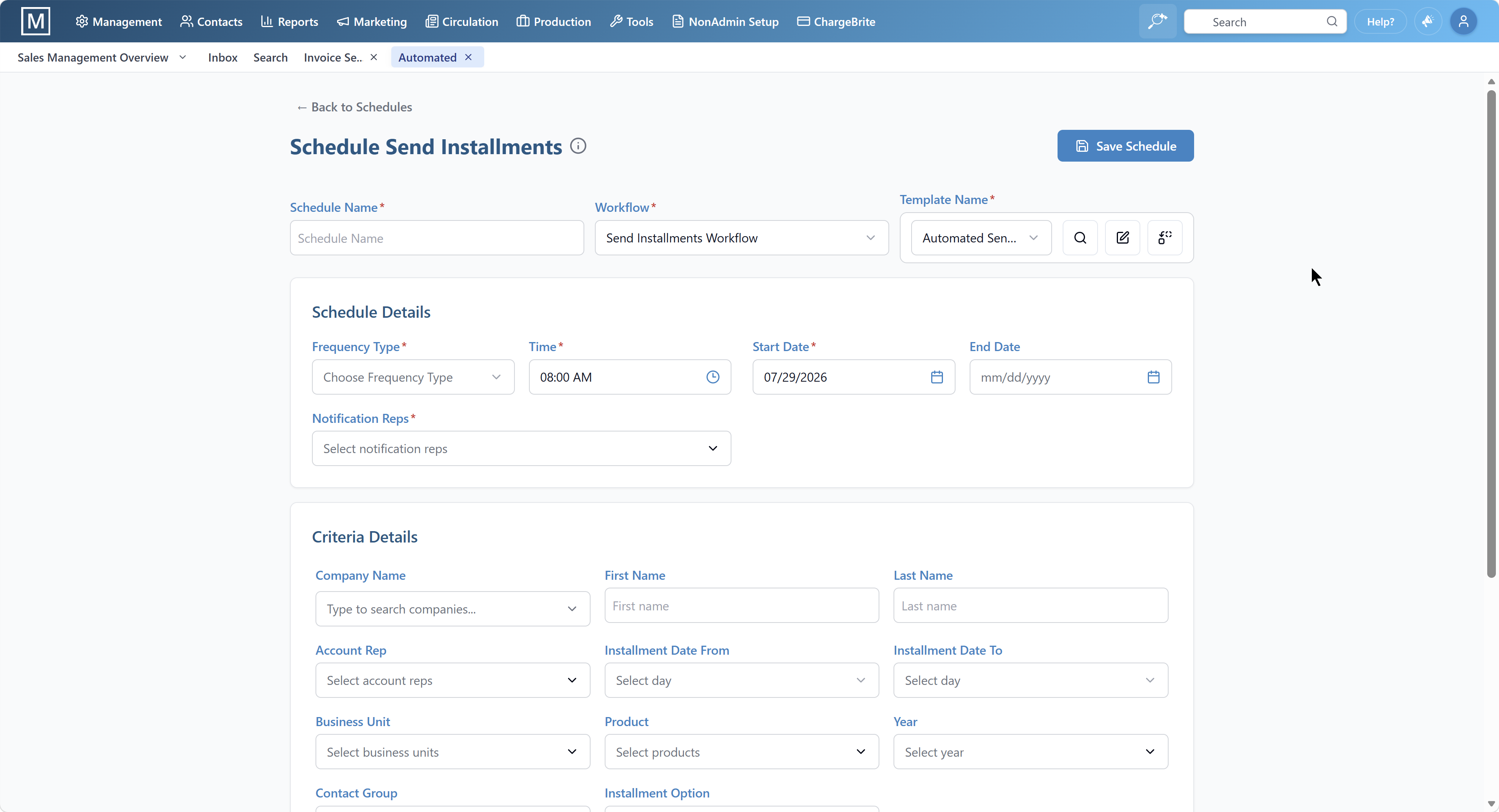
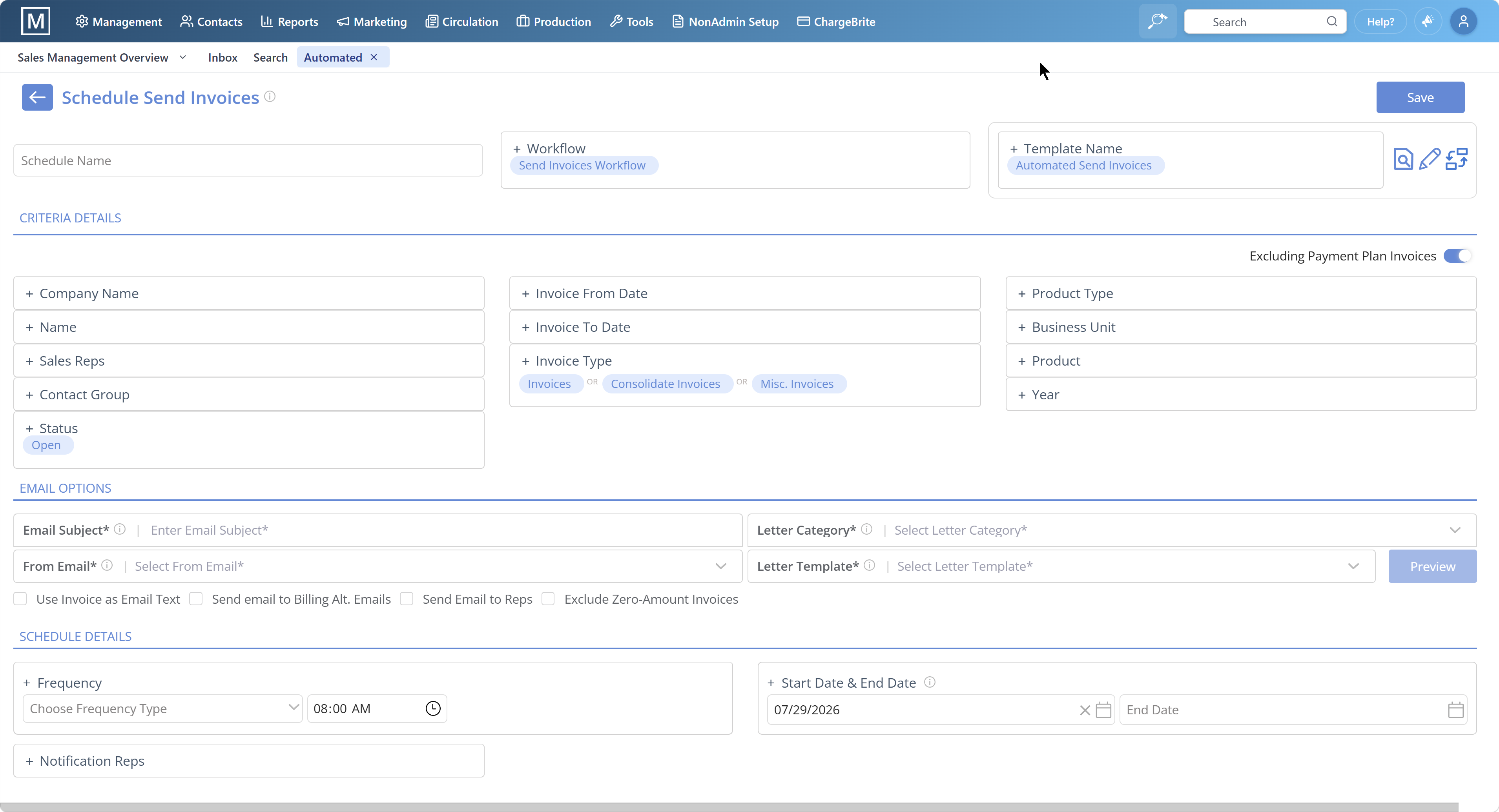
At its core, The Magazine Manager combines a publishing CRM with billing and subscription management, production management, and the full power of Mirabel's Marketing Manager — an integrated marketing automation and audience development platform. Rather than toggling between disconnected systems, publishers manage CRM data, subscription and membership records, and all marketing communications from a single environment.
The marketing automation capabilities go well beyond basic email blasts. Publishers can schedule follow-up and re-engagement campaigns, run A/B tests, build RSS Feed campaigns, and publish workflow campaigns using a dedicated Email Builder. The built-in Email Analytics Module tracks opens, clicks, unsubscribes, spam complaints, and more — giving editorial and advertising teams a clear view of audience engagement.
List targeting is equally sophisticated. The Magazine Manager's mailing list builder lets publishers draw from more than 80 contact properties — including job title, company, geography, website visitor history, email open behavior, and content interest — to build highly targeted static or dynamic lists. This level of segmentation is rarely available in generic AI CRM tools without expensive third-party add-ons.
One capability that sets The Magazine Manager apart from any general-purpose CRM is its Competitor Technology Analytics feature. Publishers can see exactly which technologies rival publications are running on their websites and track competitors' social media statistics, including page rank, Twitter followers, and Facebook likes. For publishers making strategic decisions about ad sales positioning or audience growth, this kind of competitive intelligence is built in — not bolted on.
Run A/B tests, re-engagement campaigns, RSS Feed campaigns, and workflow campaigns from one platform — no separate marketing tool required. The Email Analytics Module tracks opens, clicks, unsubscribes, and spam complaints in detail.
Choose from over 80 contact properties — including CRM data, website visitor history, email behavior, and content interest — to build static or dynamic mailing lists that reach exactly the right readers and advertisers.
Identify the technologies competitors use on their websites and monitor their social media metrics, including page rank, Twitter followers, and Facebook likes — competitive intelligence built directly into the CRM.
Manage CRM records, subscriptions, memberships, billing, production, and marketing communications without switching systems — everything flows through a single source of truth built specifically for media businesses.
Publishers are finding the most immediate value in three categories: AI writing and editing assistants that help speed up content production (ChatGPT, Jasper, Grammarly), AI-powered ad sales and revenue optimization tools that surface upsell opportunities and automate follow-ups (Salesforce Einstein, The Magazine Manager), and workflow automation tools that reduce manual data entry across billing, production, and CRM tasks. The right mix depends on where your team spends the most time and where revenue leakage is highest.
Start by identifying the hours your team currently spends on repetitive tasks — ad order entry, invoice chasing, layout proofing, or sales reporting. Multiply those hours by your average labor cost, then compare that figure against the tool's annual subscription cost. Beyond labor savings, factor in revenue gains: publishers who automate renewal reminders and upsell prompts typically see measurable lifts in renewal rates and average order value. A realistic ROI timeline for most publishing AI tools is six to twelve months.
Data security is a legitimate concern. Before adopting any AI tool, ask vendors whether your data is used to train their shared models, where data is stored and under what compliance framework, and whether they offer data processing agreements. Reputable publishing software vendors will clearly document their data handling policies. Avoid tools that are vague about whether your proprietary advertiser relationships or subscriber lists could influence outputs seen by other customers.
In practice, AI tools augment rather than replace publishing teams. Sales reps using AI-assisted CRM tools close more deals because they spend less time on administrative tasks and more time building relationships. Editorial staff using AI writing assistants produce more content without sacrificing quality control. The publishers seeing the best results treat AI as a force multiplier for their existing team, not a headcount reduction strategy.
The Magazine Manager is built specifically for magazine publishers and integrates AI-driven automation across its CRM, ad management, billing, and production modules. Rather than bolting AI onto a generic platform, the system applies automation to publishing-specific workflows — from ad order generation and contract management to invoice scheduling and layout production. Publishers also benefit from advanced audience list building across more than 80 contact properties and built-in competitor technology analytics, capabilities that generic CRM platforms do not offer without expensive add-ons.
Implementation timelines vary widely. Standalone AI writing assistants like ChatGPT or transcription tools like Otter.ai can be adopted in days. Integrated publishing platforms that combine CRM, billing, and AI-assisted workflow automation typically require a structured onboarding period of several weeks to migrate data, configure rate cards, and train staff. Publishers consistently report that the upfront investment in proper onboarding pays back quickly through faster adoption and fewer workarounds.